Reconstituted research peptides typically stay stable under refrigeration (2-8°C) for 2 to 4 weeks, with the exact window set by the peptide's sequence and the diluent used to reconstitute it. That range excludes the hidden variable that shortens it fastest: repeated freeze-thaw cycling or a stretch at room temperature, either of which can cut usable stability down to under 24 hours regardless of how careful the refrigeration was.
- Reconstituted peptides stay refrigerated at 2-8°C for 2 to 4 weeks before degradation risk climbs.
- Frozen at -20°C, most research peptides hold stability for 3 to 6 months per lot documentation.
- Bacteriostatic water reconstitution and single-use aliquoting extend usable stability versus repeated freeze-thaw cycles.
- Room-temperature reconstituted peptide should not exceed roughly 24 hours before analytical review is warranted.
- Simple Life Science documents lot-specific stability data on lyophilized peptides sold for laboratory research use.
Why this matters
A reconstituted vial that sits past its stability window doesn't fail loudly — it drifts off-specification quietly, and the researcher pulling from it in week five has no way of knowing without an analytical check. For anyone running a defined protocol in 2026, that drift is the difference between a result that replicates and one that doesn't. Storage discipline is documentation discipline: the stability window only means something if the handling history behind a given vial is actually tracked.
How Long Do Reconstituted Peptides Stay Refrigerated?
The answer depends on which storage condition you're actually asking about. Here's how the three common conditions compare:
| Storage Condition | Typical Stability Window | Best For |
|---|---|---|
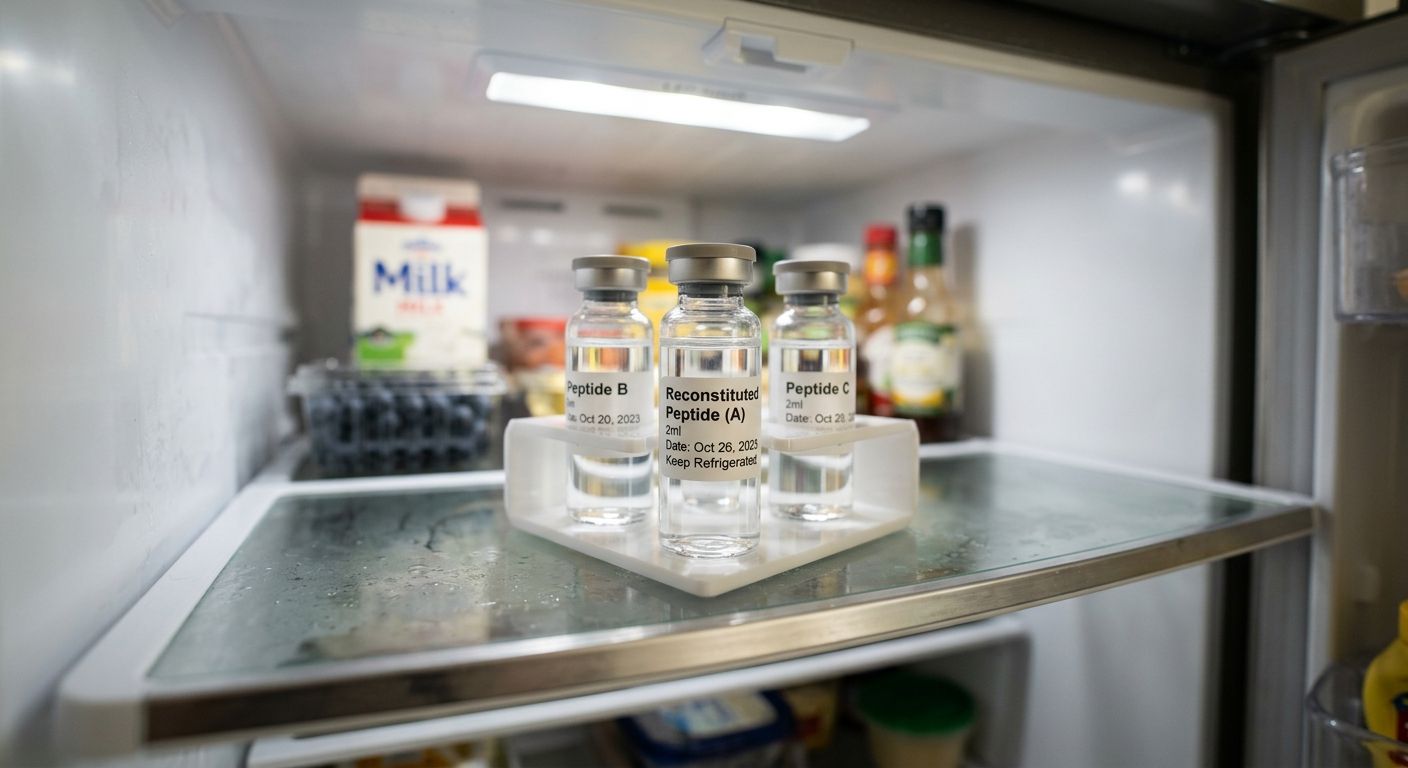
| Refrigerated (2-8°C) | 2-4 weeks | Active-use vials during a research cycle |
| Frozen (-20°C or below) | 3-6 months | Longer-term storage between experiments |
| Room temperature (~20-25°C) | Under 24 hours | Short bench work only, never storage |
The refrigerated window assumes single-access handling and a stable cold chain — a vial that's been pulled in and out of the refrigerator daily for withdrawals will not hold the full 4 weeks.
Refrigerated at 2-8°C: 2 to 4 Weeks Stable
This is the default storage condition for a reconstituted peptide in active use during a 2026 research cycle. The diluent matters here: reconstitution with bacteriostatic water generally supports the full 2-4 week window because the preservative content limits microbial growth across repeated withdrawals, whereas sterile water without a preservative is typically treated as single-use or short-window only.
Keep the vial capped between uses, minimize headspace air exposure, and avoid leaving it out on the bench between draws. Verdict: refrigerated storage at 2-8°C is the correct default for any peptide in active use — treat anything past 4 weeks as due for analytical review before further use.
Frozen at -20°C: 3 to 6 Months Stable
For longer gaps between experiments, freezing a reconstituted vial at -20°C extends usable stability to roughly 3 to 6 months, depending on the peptide's sequence and how the vial was aliquoted before freezing. This is where lot-level documentation becomes the deciding factor — a peptide with a defined certificate of analysis and a known reconstitution date lets a lab track exactly how much of that window has already elapsed. Simple Life Science documents lot-specific reconstitution and stability guidance on its lyophilized peptides sold to laboratory buyers, which is the kind of record a frozen-storage protocol depends on.
Freezing a vial that's already been reconstituted for two weeks does not reset the clock — the frozen window applies from reconstitution, not from the freeze date. Verdict: freeze immediately after reconstitution if the peptide won't be used within the refrigerated window, not partway through it.
Room Temperature: Under 24 Hours Before Degradation Risk
A reconstituted peptide left at room temperature (roughly 20-25°C) should be treated as usable for well under 24 hours. Heat accelerates the same degradation pathways — oxidation, deamidation, aggregation — that a 2-4 week refrigerated window is built to slow down. Verdict: room temperature is fine for the minutes it takes to draw a dose, not for storage of any length.
Why Peptide Stability Varies
The 2-4 week refrigerated figure is a range, not a fixed number, because several variables shift it in either direction:
- Diluent choice — bacteriostatic water (with benzyl alcohol preservative) generally supports longer multi-access stability than preservative-free sterile water.
- Sequence composition — residues like methionine and tryptophan are oxidation-prone; asparagine and glutamine are deamidation-prone, both of which shorten the practical window.
- Freeze-thaw cycling — each thaw-refreeze cycle beyond 1-2 cycles accelerates degradation, independent of total time in storage.
- Light exposure — photosensitive sequences degrade faster under ambient light; amber vials or foil wrap reduce this.
- Container and headspace air — repeated access that introduces air into the vial accelerates oxidation over the storage window.
- Aliquoting practice — single-use aliquots frozen immediately after reconstitution avoid the repeated-access degradation that a shared multi-draw vial accumulates.
Review lot-specific stability documentation
Check certificate of analysis and reconstitution guidance before storing a peptide long-term.
Can You Freeze Reconstituted Peptides More Than Once?
Freeze-thaw cycling beyond 1-2 cycles is the fastest way to shorten a peptide's stability, even inside the 3-6 month frozen window noted above. Each thaw exposes the peptide to room-temperature conditions and introduces oxidation risk, so aliquoting into single-use volumes before the first freeze avoids the problem entirely.
Does Bacteriostatic Water Change Reconstituted Peptide Shelf Life?
Bacteriostatic water, which contains a small percentage of benzyl alcohol as a preservative, generally supports the same 2-4 week refrigerated window as sterile water reconstitution. Repeated needle access over that window is the main reason bacteriostatic water is preferred for multi-draw vials in the first place — the preservative limits microbial contamination risk across withdrawals.
FAQ
How long can reconstituted peptides stay refrigerated?
Reconstituted peptides stay refrigerated at 2-8°C for 2 to 4 weeks before degradation risk rises. The exact window depends on the peptide's sequence and whether bacteriostatic or sterile water was used to reconstitute it.
Can reconstituted peptides be frozen for later use?
Yes, a reconstituted peptide frozen at -20°C typically holds stability for 3 to 6 months. Freezing should happen immediately after reconstitution rather than partway through the refrigerated window.
What's the difference between bacteriostatic water and sterile water for reconstitution?
Bacteriostatic water contains a preservative that supports repeated multi-draw access over the 2-4 week refrigerated window. Sterile water without a preservative is generally treated as single-use or short-window only.
How many freeze-thaw cycles can a reconstituted peptide handle?
1 to 2 freeze-thaw cycles is the practical ceiling before degradation accelerates. Each additional cycle exposes the peptide to room-temperature conditions and oxidation risk.
Does light exposure affect reconstituted peptide stability?
Yes, photosensitive sequences degrade faster under ambient light exposure. Amber vials or foil wrap reduce this risk during the 2-4 week refrigerated storage window.
What happens if a reconstituted peptide is left at room temperature?
A reconstituted peptide left at room temperature (roughly 20-25°C) should be considered usable for under 24 hours. Heat accelerates the same oxidation and deamidation pathways that refrigeration slows down.
Should reconstituted peptides be stored in the original lyophilized vial?
Aliquoting into smaller single-use portions immediately after reconstitution reduces the repeated-access degradation that a shared multi-draw vial accumulates over its 2-4 week window.
How is peptide degradation confirmed for research documentation?
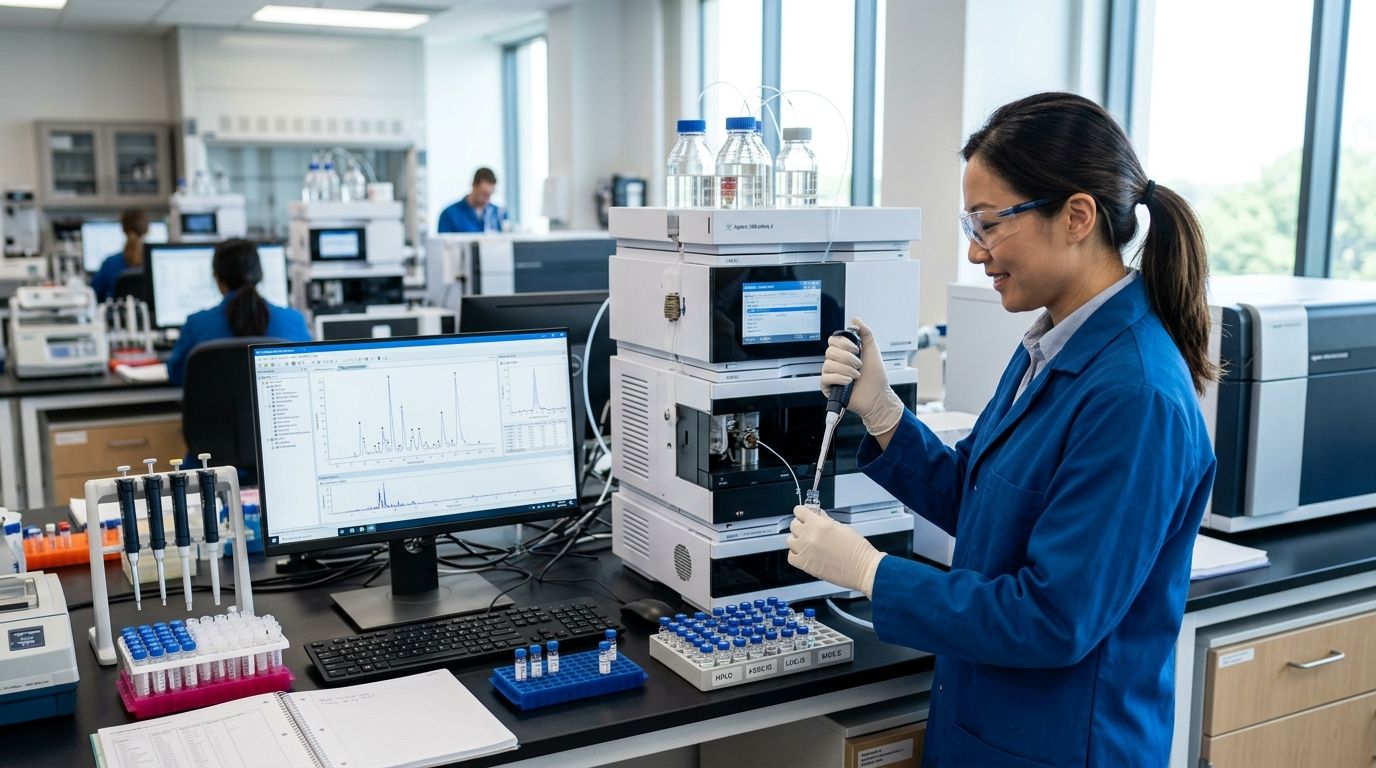
Analytical review methods such as HPLC retention-time comparison against the original certificate of analysis confirm whether a reconstituted peptide still matches its defined specification.
One last thing
The refrigerator temperature gets most of the attention, but freeze-thaw cycling and headspace air exposure from repeated withdrawals are usually the bigger practical drivers of variance inside that 2-4 week window. A lab that aliquots into single-use volumes immediately after reconstitution and freezes what it won't use within days will consistently outperform a lab that stores one shared vial at 2-8°C and draws from it daily — even though both are technically "refrigerated storage" on paper. Track the reconstitution date on the vial, not just the lot number, and the 2026 documentation trail writes itself.