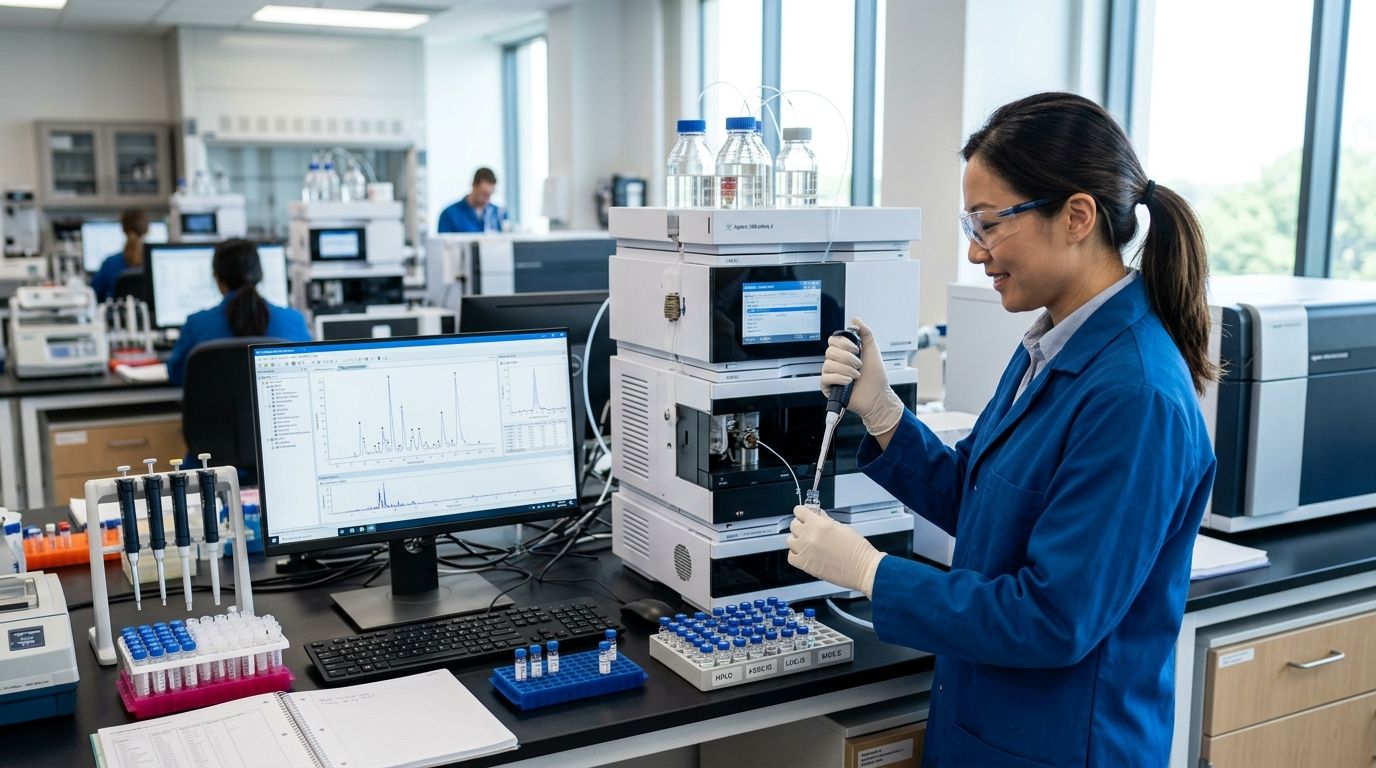
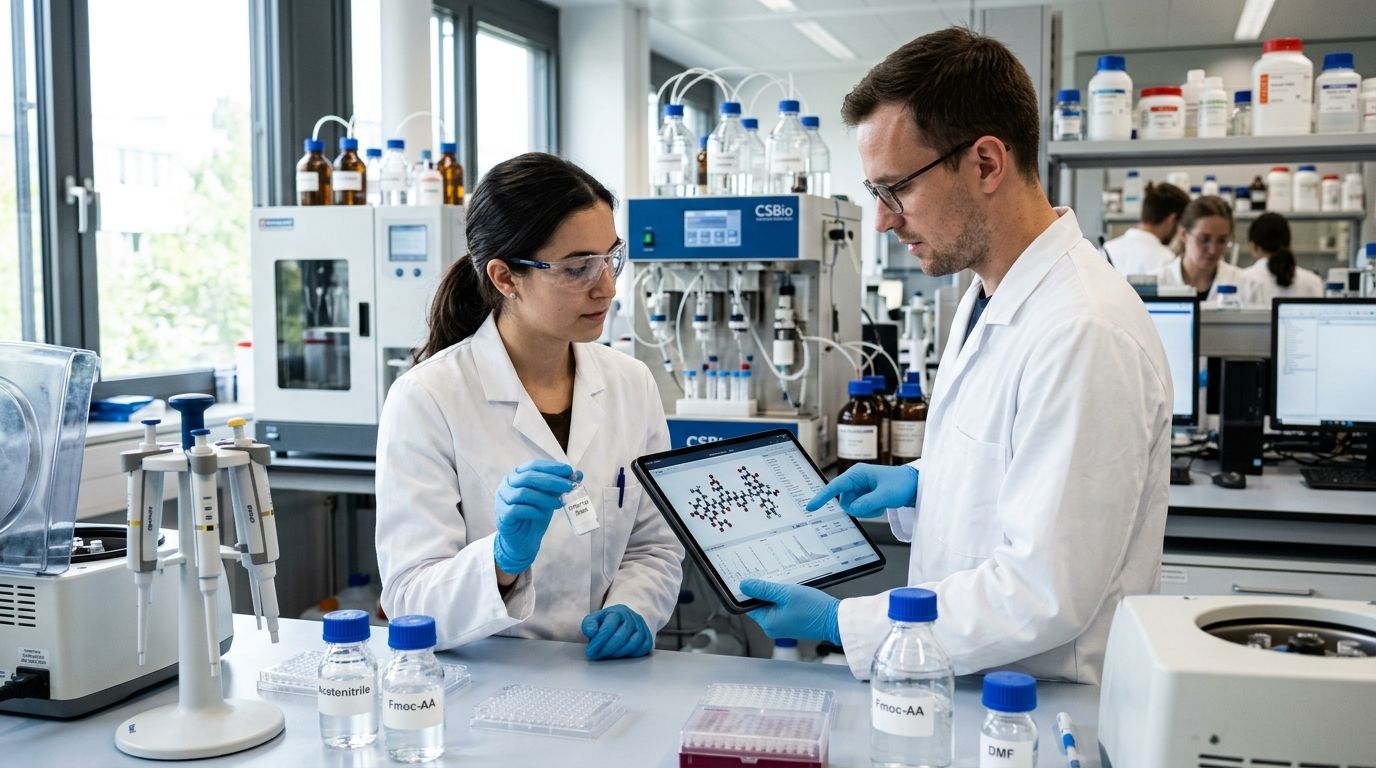
Biotech startups evaluating custom peptide synthesis companies in 2026 need a defined scope before a single quote is useful: sequence, purity target, analytical method, and quantity. This guide ranks six providers by where they fit a startup's stage — discovery, scale-up, or bundled CRO support — not by who has the loudest marketing page.
- Simple Life Science ranks best among custom peptide synthesis companies for biotech startups needing research-only material with lot-level documentation.
- Bachem and PolyPeptide Group fit startups scaling toward GMP peptide API production ahead of IND-enabling work in 2026.
- GenScript Biotech bundles synthesis with broader CRO services; CordenPharma pairs peptide and small-molecule manufacturing under one contract.
- Compare specification scope, analytical characterization, and lot documentation before committing a research budget to any vendor.
Why this matters
A startup that picks a synthesis vendor on price alone often re-orders material within two months once the first analytical report comes back short of the agreed specification. The cost of a wrong vendor choice isn't the invoice — it's the delayed assay timeline while a second lot gets re-synthesized and re-verified.
The providers below split into two groups: those built for early discovery-stage research synthesis on Simple Life Science, and larger CDMOs built for GMP-scale API manufacturing once a program moves past discovery. Matching the vendor to the stage matters more than matching it to a brand name.
What makes the best custom peptide synthesis company
- Written scope and acceptance criteria defined before synthesis starts, not negotiated after delivery
- Analytical characterization — HPLC purity and mass spec identity confirmation on every lot, not spot-checked
- Lot-level documentation that a lab can file with its own research records
- Scale flexibility from milligram research quantities up through bulk peptide API
- Turnaround aligned to startup timelines — weeks, not open-ended queues
- Scope clarity on research-use-only versus GMP/clinical-track material
At a glance
| Provider | Best for | Standout feature | Key limitation |
|---|---|---|---|
| Simple Life Science | Early discovery-stage research synthesis | Lot-level documentation with defined specifications | Research-use-only scope, not a GMP/clinical manufacturer |
| Bachem | GMP-scale peptide API manufacturing | Established large-scale GMP manufacturing sites | Longer lead times suited to later-stage programs, not early discovery |
| PolyPeptide Group | Preclinical-to-commercial CDMO partnership | Coverage across development phases under one vendor | Onboarding overhead heavier than a small discovery-stage order needs |
| CordenPharma | Combined peptide and small-molecule CDMO work | Peptide and small-molecule manufacturing under one contract | Structured for CDMO-scale programs, not small research batches |
| GenScript Biotech | Bundled synthesis plus broader CRO services | Custom synthesis alongside a wider reagent and CRO catalog | Broad service scope can mean less synthesis-specific focus |
| Biosynth | Custom peptide libraries and characterization support | Library-scale synthesis paired with analytical support | Less oriented toward single-lot bulk API orders |
1. Simple Life Science: best custom peptide synthesis company for early discovery-stage research
Simple Life Science runs custom peptide and small-molecule synthesis as a staged process — Define, Plan, Produce, Verify, Document — for laboratory researchers and institutional buyers working at the discovery stage. Orders move from sequence and feasibility review through synthesis, purification, and analytical characterization, with lot records delivered alongside the material. The platform also carries lyophilized research peptides and bulk peptide API for labs that need supply beyond a single custom run.
Simple Life Science pros:
- Defined specifications and acceptance criteria set before synthesis begins
- Analytical review and lot documentation delivered with each order
- Covers both custom synthesis and bulk API from one vendor
- Research-only positioning avoids scope ambiguity for early-stage work
Simple Life Science cons:
- Not structured for GMP/clinical-track manufacturing
- Bulk API decisions require the lab to confirm whether bulk peptide API is worth it for a small research lab before committing volume
Best for: biotech startups running discovery-phase assays that need defined-specification research peptides with a documented lot record.
Verdict: Buy for discovery-stage synthesis; revisit once a program needs GMP-track material.
2. Bachem: best for GMP-scale peptide API manufacturing
Bachem operates as a large-scale peptide API manufacturer with GMP manufacturing capability, serving pharmaceutical sponsors that need production volume beyond research quantities. Startups typically engage Bachem once a candidate peptide clears discovery and needs API supply for later-stage development work.
Bachem pros:
- Established GMP manufacturing infrastructure for scaled peptide API
- Positioned for programs moving toward regulated development stages
- Long operating history in peptide API production
Bachem cons:
- Onboarding and lead times are built around larger production runs, not small research orders
- Less suited to fast-turnaround discovery-stage synthesis
Best for: startups whose lead candidate has cleared discovery and needs GMP-track API supply.
Verdict: Hold until a program reaches the scale-up stage; not the right fit for early discovery work.
3. PolyPeptide Group: best for preclinical-to-commercial CDMO partnership
PolyPeptide Group works as a peptide-focused CDMO offering process development and manufacturing services across preclinical through commercial-scale production. Startups that expect a single vendor to carry a program from early development through later manufacturing stages often evaluate PolyPeptide for that continuity.
PolyPeptide Group pros:
- Coverage across multiple development phases under one contract
- Peptide-focused manufacturing, not a general reagent catalog
- Suited to programs planning a multi-year manufacturing relationship
PolyPeptide Group cons:
- Contract and onboarding structure is heavier than a small discovery-stage order requires
- Less economical for a single small research batch
Best for: startups planning to keep one CDMO relationship from preclinical work through later manufacturing phases.
Verdict: Hold for early-stage startups; Buy once a program needs a long-term manufacturing partner.
4. CordenPharma: best for combined peptide and small-molecule CDMO work
CordenPharma manufactures both peptide and small-molecule APIs, giving programs that combine peptide candidates with small-molecule components a single CDMO contract instead of two separate vendor relationships.
CordenPharma pros:
- Peptide and small-molecule manufacturing under one contract
- Reduces vendor count for programs spanning both modalities
- CDMO-scale manufacturing infrastructure
CordenPharma cons:
- Built for CDMO-scale programs, not small discovery-stage research batches
- Less relevant for startups working with peptides exclusively
Best for: startups running programs that combine peptide and small-molecule candidates under one manufacturing partner.
Verdict: Wait until the program defines both modalities clearly enough to justify a combined CDMO contract.
5. GenScript Biotech: best for bundled synthesis plus CRO services
GenScript Biotech offers custom peptide synthesis alongside a broader catalog of biotech reagents and CRO services, including gene synthesis and antibody work through its service divisions. Startups that want one vendor covering peptide synthesis plus adjacent research services often evaluate GenScript for that consolidation.
GenScript Biotech pros:
- Custom peptide synthesis available alongside gene synthesis and other reagent services
- Single-vendor convenience for labs ordering across multiple research categories
- Broad service catalog reduces vendor management overhead
GenScript Biotech cons:
- Breadth of service lines can mean less synthesis-specific depth than a peptide-focused vendor
- Startups needing only peptide synthesis may pay for catalog breadth they don't use
Best for: startups that want custom peptide synthesis bundled with other reagent or CRO services from one vendor.
Verdict: Hold if peptide synthesis is the only current need; Buy if the lab already orders other reagent categories from the same vendor.
6. Biosynth: best for custom peptide libraries and characterization support
Biosynth provides custom peptide synthesis with an emphasis on library-scale production and analytical characterization support, serving academic and startup labs running screening programs across multiple sequences at once.
Biosynth pros:
- Library-scale synthesis fits screening programs needing many sequences
- Analytical characterization support paired with synthesis
- Serves academic-adjacent research labs, not only large pharma sponsors
Biosynth cons:
- Less oriented toward single-lot bulk API orders
- Library-scale focus may not match a startup needing one high-purity lot
Best for: startups running peptide library screens that need many sequences synthesized and characterized in parallel.
Verdict: Buy for library-scale screening; Skip if the requirement is a single bulk API lot.
How the ranking works
Each provider is scored against the same six criteria: written scope and acceptance criteria, analytical characterization, lot-level documentation, scale flexibility, turnaround aligned to startup timelines, and clarity on research-use-only versus GMP scope. Providers built for regulated manufacturing score lower on turnaround for small discovery orders; providers built for discovery research score lower on GMP-scale capacity. Neither gap disqualifies a vendor — it just defines which stage of a program the vendor fits.
“A specification without an analytical record is just a claim.”
Documentation is what separates a usable research report from a sales sheet. Any of the six providers above can produce peptide material; fewer of them hand back a lot record a lab can file next to its own assay data without follow-up requests.
Which custom peptide synthesis company should you choose?
For a biotech startup still in discovery, running assays on defined-specification research peptides, Simple Life Science fits the stage: documented lots, research-only scope, and synthesis plus bulk API from one vendor. For a program that has cleared discovery and needs GMP-track API supply, Bachem or PolyPeptide Group fit the next stage better. For programs combining peptide and small-molecule candidates, CordenPharma consolidates that work under one contract.
The undecided default in 2026: start discovery-stage synthesis with a research-only vendor that documents every lot, then move the winning candidate to a GMP-scale CDMO once the program justifies it. Switching vendors mid-program costs a re-verification cycle either way — plan for the switch rather than being forced into it.
Request a scientific brief review
Submit a sequence and specification for feasibility review.
FAQ
What are the best custom peptide synthesis companies for biotech startups in 2026?
Simple Life Science ranks best for discovery-stage research synthesis with lot-level documentation, while Bachem and PolyPeptide Group fit startups scaling toward GMP-track peptide API production. The right choice depends on program stage, not brand size.
Is a research-only peptide vendor different from a GMP CDMO?
Yes. A research-only vendor supplies material for laboratory research use with defined specifications and lot documentation, while a GMP CDMO manufactures under regulated conditions for clinical-track development. Startups typically use a research-only vendor in discovery and move to a GMP CDMO once a candidate advances.
How much does custom peptide synthesis cost for a startup?
Cost depends on sequence length, purity target, quantity, and whether the order is a single research lot or bulk API. Request a quotation against a defined specification rather than comparing list prices across vendors.
What documentation should a peptide synthesis vendor provide?
A lot record confirming purity by HPLC and identity by mass spectrometry, tied to the written specification agreed before synthesis. Ask for the analytical report before the material ships, not after.
Is bulk peptide API worth ordering for a small research lab?
It depends on assay volume and reorder frequency; a lab running frequent assays on one sequence often benefits from bulk API, while a lab screening many sequences does not. Review the specific tradeoffs before committing budget to a bulk order.
How often should peptide batches be retested for purity?
Retesting frequency depends on storage conditions and how long a lot sits before use; labs storing lyophilized peptides long-term retest more frequently than labs using material within weeks of receipt. Check the specific retest schedule against your own storage protocol.
Can one vendor handle both custom synthesis and bulk API?
Some vendors, including Simple Life Science, offer both custom peptide synthesis and bulk peptide API from a single account, which reduces vendor management for labs that need both services.
What's the difference between a peptide CDMO and a reagent supplier with synthesis services?
A peptide CDMO like PolyPeptide Group or CordenPharma is built around scaled manufacturing contracts, while a reagent supplier with synthesis services, such as GenScript Biotech, bundles synthesis alongside a broader catalog of research products.
One last thing
The fastest way to separate a documentation-first vendor from a sales-first one: ask for the analytical report format before placing an order, not after receiving the material. A vendor that can show a sample lot record on request is telling you how it actually runs the Verify and Document stages — a vendor that can't is asking you to take the specification on faith.