
Peptide purity data only means something when it comes from a method matched to a written specification — a single HPLC trace without a defined acceptance criterion tells a researcher almost nothing. This guide ranks the analytical testing approaches used for peptide purity confirmation in 2026, matched to the research stage each one actually serves.
- Combined analytical characterization panels (HPLC + LC-MS + AAA + endotoxin) are the best analytical testing services for peptide purity when a custom synthesis project needs full specification confirmation.
- Reverse-phase HPLC alone remains the fastest option for routine lot release purity checks in 2026.
- LC-MS is the only method on this list that confirms molecular identity, not just purity percentage.
- Amino acid analysis is the lowest-cost route to content verification but does not detect structural impurities.
- Third-party independent verification is the right add-on when provenance and chain-of-custody matter more than speed.
Why this matters
A certificate of analysis is only as reliable as the method behind it and the acceptance criteria it was measured against. Research labs buying lyophilized peptides, bulk API, or custom-synthesized sequences in 2026 need to know which analytical method answers which question — purity percentage, identity confirmation, content accuracy, or contamination status are four different measurements, not one.
Mismatched methods create false confidence. A researcher relying on a single HPLC purity number with no mass spec identity confirmation has verified that a peak is clean, not that the peak is the intended sequence. How often peptide batches should be retested for purity covers the retest cadence question directly; this guide covers which method to run at each checkpoint.
What makes the best analytical testing service for peptide purity
- Method matched to defined specification — the test reports against a written acceptance criterion, not a generic pass/fail
- Identity confirmation, not just purity percentage — mass spec or equivalent structural verification alongside chromatographic purity
- Documented method and reference standard — lot-level records that trace back to a stated analytical method
- Turnaround suited to the research stage — feasibility screening moves faster than final lot release documentation
- Independent verification capability — the option to confirm supplier data through a third party when provenance matters
- Reproducibility across lots — consistent results run to run, not a one-off number
At a glance: analytical testing methods for peptide purity in 2026
| Method | Best for | Standout feature | Key limitation |
|---|---|---|---|
| Combined analytical characterization panel | Custom synthesis project acceptance | Full specification confirmation in one deliverable | Longer turnaround than a single test |
| Reverse-phase HPLC (RP-HPLC) | Routine lot release | Fast, well-established purity readout | Confirms purity, not identity |
| LC-MS identity and impurity profiling | Structural confirmation | Detects sequence and mass-level impurities | Requires specialized instrumentation |
| Amino acid analysis (AAA) | Content and potency verification | Confirms actual peptide content, not just relative purity | Blind to structural or sequence errors |
| Third-party independent verification | Provenance and audit trail | Confirms supplier data independently | Added cost and lead time |
| Endotoxin testing (LAL assay) | Documented endotoxin limits | Reports results in endotoxin units per milligram (EU/mg) | Does not assess purity or identity at all |
1. Combined analytical characterization panel: best analytical testing service for custom synthesis project acceptance
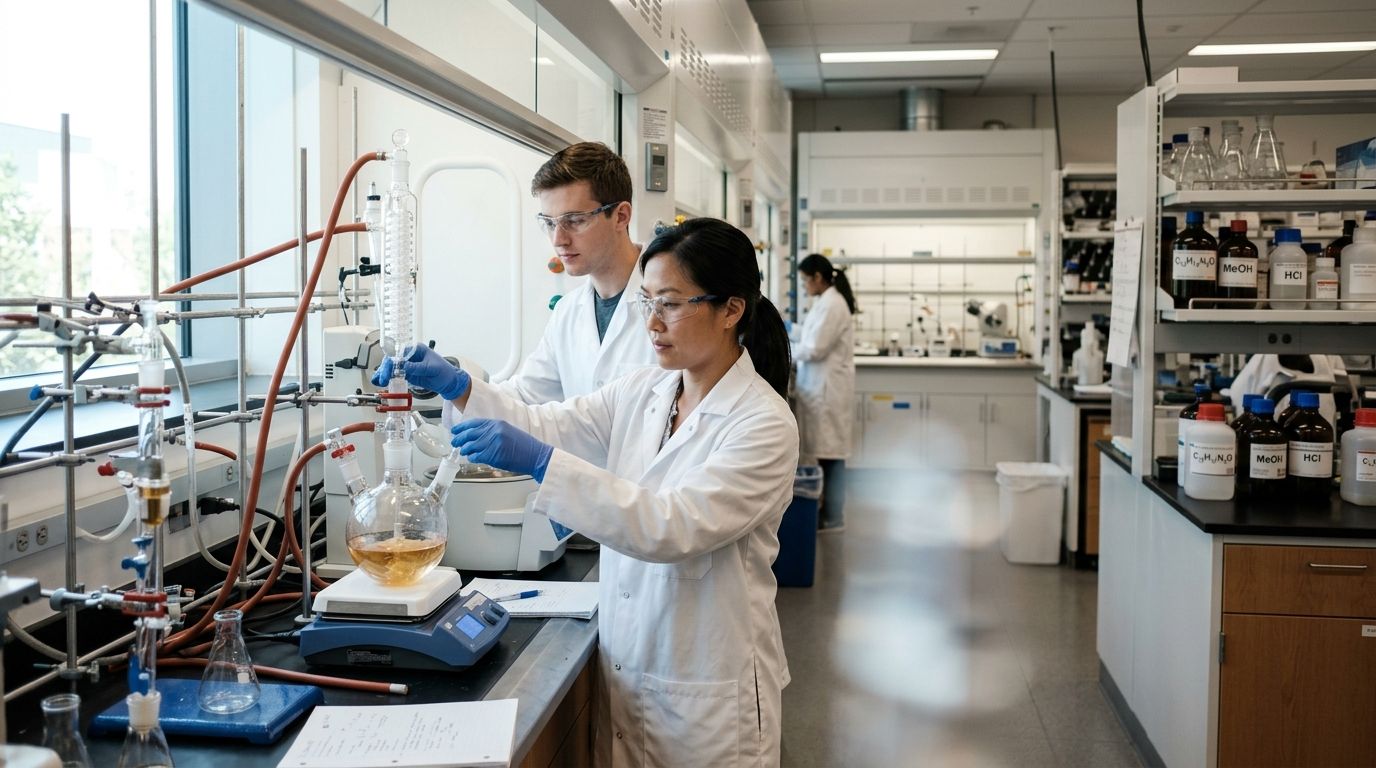
A combined panel runs HPLC purity, LC-MS identity confirmation, amino acid content analysis, and endotoxin testing against a single project specification, then compiles the results into one lot record. This is the format used when a custom-synthesized sequence needs full acceptance documentation before a research lab signs off on the lot. Simple Life Science structures custom peptide and small-molecule synthesis work around this stage — Define, Plan, Produce, Verify, Document — so the analytical panel is the Verify and Document stage, not an afterthought bolted onto production. Details on the synthesis pathway itself are on the Simple Life Science site.
Combined panel pros:
- Confirms purity, identity, content, and endotoxin status against one written specification
- Produces a single lot-level record instead of four disconnected reports
- Matched to project-specific acceptance criteria rather than a generic grade
Combined panel cons:
- Slower turnaround than running one test alone
- Only worth the scope for projects that actually need full specification confirmation, not routine re-checks
Best for: custom synthesis projects and any lot requiring complete acceptance documentation before use. Verdict: Buy for project acceptance and final lot release.
2. Reverse-phase HPLC purity analysis: best analytical testing service for routine lot release
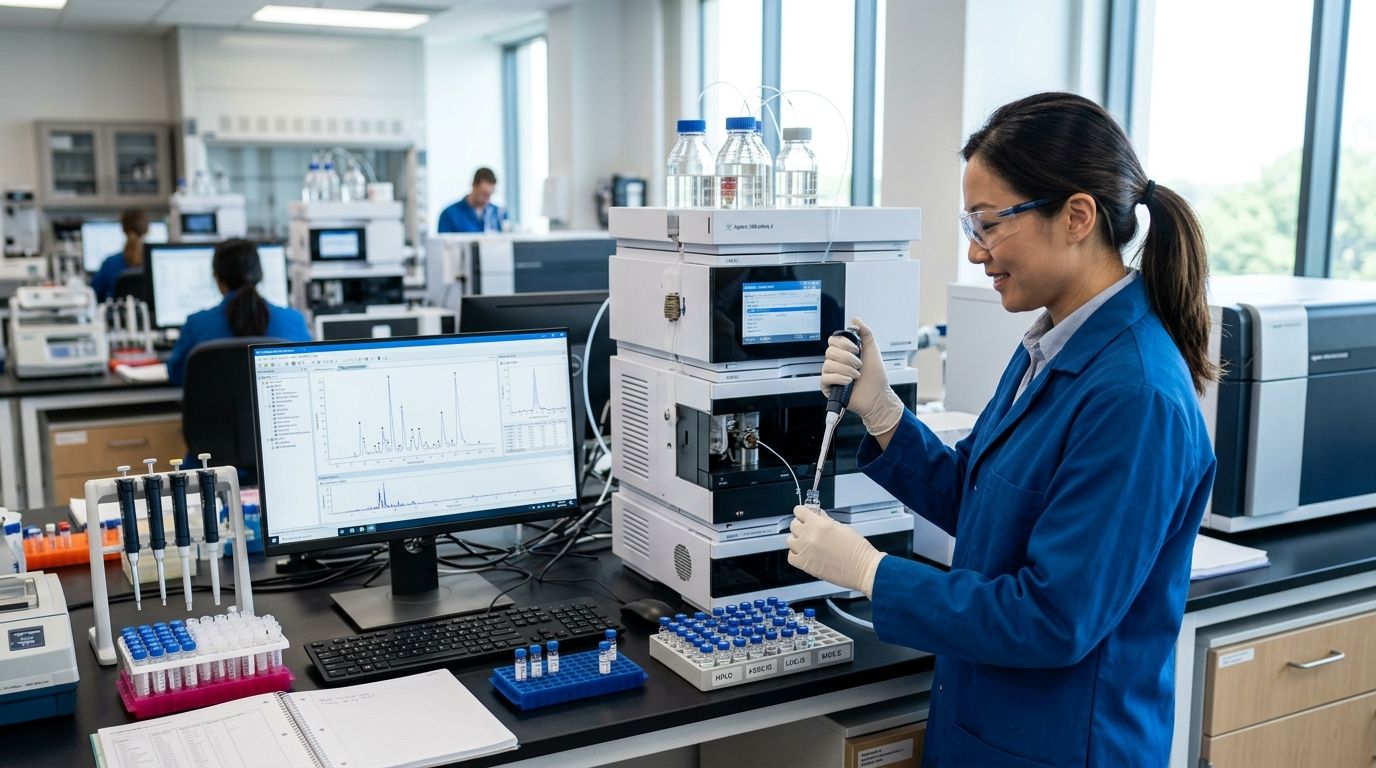
RP-HPLC separates a peptide sample from its impurities based on hydrophobicity and reports purity as a percentage of the main peak against total peak area. Research-grade peptides are commonly sold against purity tiers — ≥90%, ≥95%, and ≥98% are the standard grades referenced across the industry in 2026 — and HPLC is the method that generates that number.
RP-HPLC pros:
- Fast and well-established for routine purity confirmation
- Directly supports the ≥95% and ≥98% purity grades common in research peptide specifications
- Reproducible across labs when run against the same reference standard
RP-HPLC cons:
- Confirms purity of the main peak, not that the peak is the correct sequence
- Does not detect structurally similar impurities that co-elute
Best for: lot-to-lot purity checks on already-characterized peptides. Verdict: Buy for routine release testing.
3. LC-MS identity and impurity profiling: best analytical testing service for structural confirmation
Liquid chromatography-mass spectrometry separates a sample the way HPLC does, then measures the mass of each eluting component. This confirms that the molecule present matches the intended sequence rather than a shorter, longer, or modified variant with a similar retention time.
LC-MS pros:
- Confirms molecular identity, not just relative purity
- Detects impurities that HPLC alone can miss, including truncated or modified sequences
- Supports provenance claims when paired with a documented reference standard
LC-MS cons:
- Requires specialized instrumentation and trained analysts
- Typically run alongside HPLC rather than as a full replacement for purity data
Best for: new sequence verification and any lot where identity confirmation carries as much weight as purity. Verdict: Buy for custom or novel sequences.
4. Amino acid analysis (AAA): best analytical testing service for content and potency verification
AAA hydrolyzes a peptide sample into its individual amino acids and measures their ratios against the expected composition, confirming actual peptide content rather than relative purity within a chromatographic peak.
AAA pros:
- Confirms the amount of actual peptide present, useful for content-based specifications
- Lower instrumentation overhead than LC-MS
- Cross-checks HPLC purity data from a different analytical angle
AAA cons:
- Blind to sequence order — it confirms composition, not arrangement
- Does not detect structural impurities or identity mismatches on its own
Best for: labs verifying content accuracy on lots already confirmed for identity. Verdict: Hold — pair with HPLC or LC-MS rather than running alone as a full specification.
5. Third-party independent verification testing: best analytical testing service for provenance and audit trail
An independent lab re-tests a sample already characterized by the supplier, generating a second, unaffiliated data set against the same or an equivalent method. This is the format research institutions use when procurement policy requires confirmation outside the supplier's own analytical review.
Third-party verification pros:
- Confirms supplier data independently, strengthening provenance and audit trail documentation
- Useful for institutional procurement teams with written verification requirements
Third-party verification cons:
- Adds cost and lead time to the research timeline
- Only as reliable as the method the independent lab chooses to run
Best for: institutional buyers and grant-funded labs with formal verification requirements. Verdict: Buy when written procurement policy calls for independent confirmation.
6. Endotoxin testing (LAL assay): best analytical testing service for documented endotoxin limits
The Limulus amoebocyte lysate (LAL) assay detects bacterial endotoxin and reports results in endotoxin units per milligram (EU/mg). It says nothing about purity or identity — it is a contamination check run alongside, not instead of, purity and identity testing.
LAL assay pros:
- Standard, well-established method for documenting endotoxin status
- Reports a quantifiable unit (EU/mg) suited to written specifications
LAL assay cons:
- Does not assess purity, identity, or content at all
- Only relevant when endotoxin status is part of the defined specification
Best for: research applications with a documented endotoxin limit in the project specification. Verdict: Buy when endotoxin status is a stated requirement, Skip otherwise.
How we ranked these
Each method was scored against the criteria above: match to a defined specification, identity confirmation capability, documentation format, turnaround relative to research stage, independent verification option, and reproducibility across lots. Supplier selection matters as much as method selection — the best 7 research peptide suppliers in 2026 covers how supplier documentation practices affect the analytical data a lab actually receives.
Which analytical testing service should you choose?
For a custom synthesis project, the combined analytical characterization panel is the default choice — it is the only option that confirms purity, identity, content, and endotoxin status against one specification before a lot is accepted. For routine re-testing of already-characterized stock, reverse-phase HPLC covers most research needs on its own. Add LC-MS whenever a sequence is new or identity confirmation is written into the specification, and reserve third-party independent verification for institutional procurement requirements rather than routine work.
“A purity percentage without identity confirmation tells you the peak is clean, not that the peak is the intended sequence.”
Request analytical documentation
Submit a scientific brief for lot-level analytical review on a custom synthesis project.
FAQ
What is the best analytical testing service for peptide purity in 2026?
A combined analytical characterization panel covering HPLC, LC-MS, amino acid analysis, and endotoxin testing is the most complete option in 2026 for confirming a full specification. Reverse-phase HPLC alone remains the fastest choice for routine lot re-checks.
Is HPLC or LC-MS better for confirming peptide identity?
LC-MS confirms molecular identity because it measures mass, while HPLC alone only confirms relative purity of a chromatographic peak. Research labs verifying a new or custom sequence should run both, not one in place of the other.
What purity percentage should research peptides meet?
Research peptides are commonly sold against ≥90%, ≥95%, or ≥98% purity grades, with the specification set by the intended research use. The stated grade should match the written specification reviewed at lot acceptance.
How often should peptide batches be retested for purity?
Retest cadence depends on storage conditions, lyophilized versus reconstituted state, and the project's defined specification rather than a single fixed interval. See how often peptide batches should be retested for purity for the full breakdown.
Does amino acid analysis replace HPLC purity testing?
No — amino acid analysis confirms peptide content and composition, not chromatographic purity or structural integrity. It is run alongside HPLC, not as a substitute for it.
When does a research lab need third-party independent verification?
Third-party verification is typically required by institutional procurement policy or grant compliance rather than routine research work. It confirms supplier analytical data through an unaffiliated lab, strengthening the audit trail.
What does endotoxin testing add to a peptide analytical package?
Endotoxin testing (LAL assay) reports contamination status in endotoxin units per milligram (EU/mg) and says nothing about purity or identity. It is only necessary when the project specification includes a documented endotoxin limit.
One last thing
The method that gets skipped most often is identity confirmation — labs run HPLC, see a clean purity number, and stop there. A purity percentage confirms the peak is clean; it does not confirm the peak is the intended sequence, which is exactly what LC-MS is built to catch before a lot enters a research protocol in 2026.